
There is a moment every dedicated gamer knows — a pause in the middle of an open world, controller in hand, staring at a landscape so beautiful and so real-feeling that a quiet thought surfaces: I wish I could actually go there. In 2026, that thought has become a travel movement. It is called a gami-vacation, and it is reshaping where an entirely new generation of travelers chooses to go.
A gami-vacation is a trip built around visiting real-world destinations that inspired — or directly appear in — a favorite video game. According to Outlook Traveller’s analysis of the gami-vacation trend, nearly one in three US travelers now shapes their getaways based on beloved gaming worlds, and reports from National Geographic confirm that gami-vacations are among the fastest-growing travel motivators for Gen Z and Millennial travelers in 2026. Tourism boards from Japan to Italy are already responding — developing game-inspired itineraries, partnering with gaming influencers, and promoting the real landscapes that sparked the virtual ones.
For island lovers, this trend is particularly exciting. Some of the most iconic and visually arresting video game worlds are set on islands — and those islands are real, visitable, and in many cases far more extraordinary in person than any digital render could fully capture. This guide covers the best game-inspired islands to visit in 2026, why the gami-vacation trend matters, and how to plan a trip that satisfies both the gamer and the traveler in you.
What Is a Gami-Vacation?
A gami-vacation goes beyond simply playing games on the go. The game itself becomes the itinerary — the traveler moves through real terrain as if navigating a level, hunting for Easter eggs, matching in-game camera angles with real locations, and experiencing the places they once controlled on screen. It is a form of travel that transforms static sightseeing into something dynamic, narrative-driven, and deeply personal.
What distinguishes a gami-vacation from a standard sightseeing trip is the layer of meaning the game adds to the destination. When you hike to the ruins of Kaneda Castle on Tsushima Island, Japan, you are not just visiting a historic site — you are walking through terrain that the developers of Ghost of Tsushima studied, measured, and translated into one of the most acclaimed open-world games ever made. When you take a boat tour to the Blue Grotto on Capri, Italy, you are retracing routes that inspired the puzzle world of Anacapri: The Dream. The game does not replace the destination — it deepens it.
The gami-vacation trend is particularly popular among Gen Z and Millennials, who grew up with immersive games and seek experiences that connect virtual adventures with real-world locations. Destination marketing organizations are now collaborating with gaming influencers to highlight regions made famous by video games, opening niche markets for gaming-themed tours and boosting local tourism in destinations featured in blockbuster games.
Islands are among the most naturally suited destinations for this kind of travel. Their contained geography, dramatic natural beauty, and rich historical and cultural depth make them ideal settings for game designers — and ideal destinations for travelers who want to experience the real version of a world they have already explored virtually.
The Best Game-Inspired Islands to Visit in 2026
Here are the standout island destinations generating the most gami-vacation interest in 2026, and the games that put them on the map.
Tsushima Island, Japan — Ghost of Tsushima
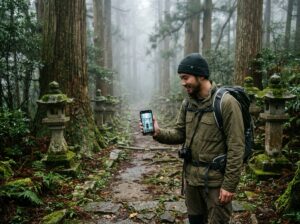
No island is more closely associated with the gami-vacation movement than Tsushima. The island stretches about 82 kilometers north to south and is almost entirely covered in dense forest — cedar, cypress, and broadleaf trees blanket steep mountains that drop sharply to the sea, with tiny fishing villages sitting in narrow coves along one of Japan’s most convoluted coastlines. It sat largely under the international radar until Sony’s Ghost of Tsushima was released in 2020 and introduced millions of players worldwide to its ancient shrines, misty forests, and samurai history.
The game’s connection to the real island runs deep. Many of the locations in Ghost of Tsushima are real places that can be visited in person — Komoda Beach, where the game’s opening battle takes place, is one of the island’s main tourist attractions, and the site of a memorial to those lost in the real Mongol invasion of 1274. The ruins of Kaneda Castle, which the game fully recreates as a central story location, can be hiked to via a trail that rewards visitors with panoramic views of Aso Bay below.
What makes Tsushima especially compelling for the gami-vacationer is how much the real island exceeds the game’s depiction. Almost 90 percent of the island is still covered in ancient forest, and visitors can encounter creatures unique to Tsushima — including the rare Tsushima Leopard Cat — while exploring terrain that has remained largely unchanged for centuries. Nagasaki Prefecture has developed a dedicated three-day Tsushima itinerary for game-inspired visitors, and the island was selected as one of The New York Times‘ “52 Places to Go in 2026” — a remarkable crossover moment between gaming culture and mainstream travel media.
Capri, Italy — Anacapri: The Dream
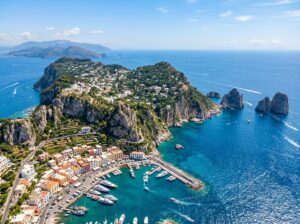
The island of Capri, rising dramatically from the Bay of Naples with its limestone cliffs and impossibly blue grottos, inspired the puzzle-exploration game Anacapri: The Dream — a title that invited players to wander through Capri’s lanes, ruins, and sea caves in meditative, story-driven exploration. As Euronews highlights in its guide to real-life video game destinations, Capri rewards gami-vacationers with a boat tour to the ethereal Blue Grotto, a walk along the dramatic Via Krupp, and exploration of the beautiful Villa San Michele.
Capri rewards travelers who go beyond the headline attractions. The quieter hilltop town of Anacapri — the direct namesake of the game — offers a more contemplative island experience than the busy Marina Grande harbor, with panoramic views across the Tyrrhenian Sea and access to trails that feel remarkably close to the game’s wandering, discovery-driven pace.
Nami Island, South Korea — Gaming and K-Culture Crossover
South Korea’s Nami Island — a small, crescent-shaped river island in Chuncheon — has become a significant destination for gami-vacationers who combine their trip with Seoul’s legendary K-beauty culture and its thriving gaming and esports scene. The island’s tree-lined paths and seasonal beauty have appeared in numerous Korean cultural productions, and Seoul — just two hours away — is a major destination for gami-vacationers attending the League of Legends World Championship and other major esports events that draw tens of thousands of international gaming fans each year.
This island-plus-city combination — a day trip to Nami followed by days immersed in Seoul’s gaming cafés, skincare districts, and esports arenas — has become one of the most popular gami-vacation itineraries for visitors from across Asia and beyond. It connects naturally to the glowcation movement as well, making Seoul and its surrounding islands a destination that satisfies multiple 2026 travel trends simultaneously.
Okinawa, Japan — Genshin Impact and Island RPG Worlds
Japan’s southernmost island chain, Okinawa, draws gami-vacationers inspired by the island-based regions of Genshin Impact — whose Inazuma region, set on a fictional Japanese island archipelago, draws heavily from Japan’s island culture, Shinto shrine architecture, and coastal landscapes. Okinawa’s distinctive Ryukyuan culture, ancient castle ruins, turquoise waters, and dense subtropical forests feel remarkably close to the kind of island-world environments that have made Genshin Impact the most-played free-to-play game in the world. For travelers who have already explored our guide to Okinawa as Japan’s hidden island paradise, the gami-vacation lens adds an entirely new layer to the destination’s already rich travel appeal.
Tsushima and Beyond — The Broader Japan Island Trail
Japan’s islands collectively represent perhaps the richest gami-vacation territory on Earth. Beyond Tsushima, the island of Miyajima near Hiroshima — with its floating torii gate, deer roaming freely among the shrines, and dense forested mountain — evokes the atmospheric island shrine environments of games including Sekiro: Shadows Die Twice and multiple entries in the Zelda franchise. The broader Japanese island experience — moving between ancient shrines, forest trails, and coastal fishing villages — is one that game designers have returned to repeatedly, and that rewards real-world exploration at every turn.
How to Plan Your Island Gami-Vacation
A successful gami-vacation requires a slightly different approach to planning than a conventional island trip. Here is how to make the most of the experience.
Play the Game Before You Go — Deeply
The richer your knowledge of the game before you arrive, the more your real-world visit will reward you. Do not just complete the main story — explore the open world, seek out the hidden shrines, read the in-game lore. The locations you discover on Tsushima Island will mean infinitely more if you can recognize the cliff you spent an hour climbing in the game, or the shrine architecture that the developers replicated almost exactly from a real structure you can now stand in front of.
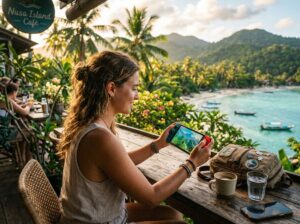
Many dedicated gami-vacationers keep a screenshot folder from the game on their phone and spend time on the island matching real views to in-game camera angles. This simple exercise — finding real locations, matching in-game camera angles, and using AR overlays to blend virtual and real environments — is one of the most satisfying activities a game-inspired trip can offer.
Go Beyond the Famous Locations
Game developers research their inspirational destinations extensively, and the most evocative locations they discovered are often not the most famous ones. On Tsushima, the Watatsumi Shrine with its five torii gates rising from the sea — a structure that closely mirrors the game’s sea-level shrine imagery — is far less visited than the island’s main historical sites and far more atmospheric. Japan Uncharted’s comprehensive Tsushima real-place guide is an excellent resource for matching game locations to their real-world counterparts before your visit. On Capri, the hillside trails above Anacapri that the game uses as a template for its wandering routes are emptier and more beautiful than the crowded marina below.
Seeking out secondary locations requires a bit of research, but it also naturally steers you away from the crowds that gather at headline attractions — making your gami-vacation simultaneously more authentic and more rewarding.
Slow Down and Stay Longer
Islands reveal themselves gradually, and the gami-vacation experience deepens significantly when you give it time. The misty, contemplative atmosphere of Tsushima that makes Ghost of Tsushima so visually distinctive is something you need a full day of quiet hiking to genuinely absorb — it cannot be checked off in two hours between ferry connections. This is why the gami-vacation philosophy pairs so naturally with the slow travel and micro-retirement approach — lingering in a destination, living at its pace, and letting the layers of meaning accumulate day by day.
Connect with the Local Community
The gami-vacation movement, at its best, generates genuine cultural curiosity. Tsushima’s local community has embraced the Ghost of Tsushima-inspired visitor wave with thoughtfully designed trails, local guide services, and cultural programming that connects gaming fans to the island’s real history — the actual Mongol invasion, the actual samurai clans, the actual shrines that have stood for over a millennium. Engaging with that history, rather than treating the island as a backdrop for selfies, transforms a gami-vacation into something far more meaningful.
Why the Gami-Vacation Trend Matters for Island Travel
Gami-vacations encourage exploration not only of game-linked locations but also of landscapes and historical sites that inspired these games — dramatic island terrains and historical sites that attract travelers who might never have discovered them through conventional travel channels. This is the trend’s most significant contribution to the broader travel landscape: it is opening up genuinely under-visited destinations to international attention.
Tsushima Island received only a fraction of the visitors that other Japanese islands attract — until Ghost of Tsushima introduced it to millions of players worldwide. Capri, while famous, rarely appears on gaming-culture itineraries — until Anacapri: The Dream offered a new lens through which to see it. Islands that might otherwise be overlooked in favor of more mainstream destinations are finding new audiences through the games that love them.
For island travel as a whole, this is a genuinely positive development. The gami-vacation brings travelers who are already emotionally invested in a destination before they arrive — curious, engaged, and motivated to understand what they are experiencing rather than simply photograph it. That kind of traveler tends to stay longer, spend more locally, and leave a more positive impression on the communities they visit. This connects directly to the conversation around how responsible island travel can counteract the damage done by overtourism — by directing curious, respectful visitors to destinations that genuinely benefit from the attention.
Ready to Start Your Island Gami-Vacation?
The worlds that game designers create do not come from nowhere. They are assembled from research trips, photographs, cultural deep dives, and a genuine love for the places that inspired them. When you take a gami-vacation to the island that sparked your favorite game, you are not just retracing a developer’s footsteps — you are discovering why they fell in love with the place in the first instance.
Tsushima is waiting with its ancient shrines and leopard cats. Capri’s Blue Grotto glows just as ethereally in real life as it does on screen. Okinawa’s castle ruins and turquoise seas have been inspiring imaginations — digital and otherwise — for generations. The game was always pointing somewhere real. Now it is time to go there.
Looking for more ways to explore the islands that are trending in 2026? Check out our guide to island set-jetting destinations made famous by film and TV, and explore our picks for the emerging island escapes highlighted by National Geographic this year.