
For most of travel history, a private island was the exclusive domain of royalty, rock stars, and the ultra-wealthy. The very idea of having an entire island to yourself — your own beach, your own reef, your own unhurried rhythm — felt more like a fantasy than a travel option. But 2026 is quietly rewriting that story.
The private island stay has evolved from an impossible dream into one of the most sought-after luxury travel experiences of the year. Industry research confirms that high-end travelers are increasingly choosing privacy, seclusion, and depth over spectacle and scale — and small private islands deliver all three in ways that no mega-resort ever could.
This is not just a trend for billionaires. While true whole-island buyouts remain rarefied, a growing number of boutique private island resorts across the Maldives, Seychelles, Caribbean, and South Pacific now offer stays that are within reach of the luxury traveler willing to plan ahead and invest in a truly transformative escape. Here is everything you need to know about why private island stays are the defining accommodation trend of 2026 — and how to experience one for yourself.
Why Private Island Stays Are Surging in 2026
The private island trend does not exist in a vacuum. It is the direct result of several converging shifts in how travelers — especially discerning, experience-driven ones — think about what a trip should feel like.
Overtourism Fatigue Is Real
Popular island destinations around the world are facing a reckoning with overcrowding. Travelers who once dreamed of Bali, Santorini, or the Amalfi Coast are increasingly finding that the reality on the ground does not match the images that inspired them. Crowded beaches, overbooked restaurants, and a relentless parade of selfie sticks have eroded the sense of discovery that made those places special.
Small private islands offer a structural solution to this problem. With inherently limited guest capacity and no connection to the mass tourism infrastructure of a larger destination, they offer the kind of uncrowded, unhurried experience that overtourism has quietly taken from the world’s most famous shores. If you have been following the conversation around how overtourism is reshaping island travel, the rise of private islands reads as the logical next step.
Quiet Luxury Has Replaced Flashy Excess
“Quiet luxury” has become the dominant philosophy shaping premium travel in 2026. Travelers with means are no longer hunting for spectacle — they want trips that feel like stepping out of noise rather than into another version of it. Privacy, time, and a sense of genuine control now define the experience far more than brand names or five-star star ratings ever did.
A small private island embodies quiet luxury in its most literal form. There is no lobby to navigate, no pool area to compete for, no schedule dictated by resort programming. The island adapts to you — not the other way around.
Wellness Has Become the Primary Travel Motivation
Across luxury travel reports, wellness has made a remarkable transition: it is no longer an amenity that a good resort happens to offer. It is now a primary reason people choose where to go. In 2026, travelers increasingly view a trip as a form of preventative health and life maintenance — and few environments support genuine restoration better than a small, quiet, privately held island where the nearest distraction is the horizon.
This connects directly to the broader island wellness travel movement, which has been reshaping how people think about what a meaningful island escape should actually provide.
The World’s Best Regions for Private Island Stays
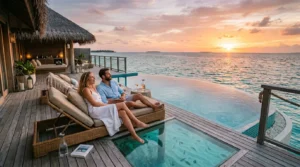
Private island experiences are available across a wide range of destinations, each offering a distinct character. Here are the regions leading the movement in 2026.
The Maldives
The Maldives is, by its very geography, the natural home of the private island stay. The archipelago consists of over 1,000 coral islands spread across the Indian Ocean, the majority of them uninhabited. Every resort in the Maldives sits on its own island — which means that even a standard stay here has a private island quality that is unmatched almost anywhere else in the world.
At the boutique end of the spectrum, properties like Naladhu Private Island — which houses just 20 elegant residences and has been named the Best Island Resort in the Indian Ocean four consecutive years by Condé Nast Traveler — represent the private island ideal at its most distilled. Guests arrive to their own private beach, their own butler, and a pace of life shaped entirely by their preferences. For those seeking something even more secluded, Soneva Secret in the Maldives’ most remote atoll opened recently with just 14 villas — each with a dedicated chef and a private Barefoot Guardian — accessible only by boat.
The Seychelles
The Seychelles offers a private island experience shaped by dramatic granite geology, ancient hardwood forests, and an extraordinary concentration of endemic wildlife. Unlike the flat coral atolls of the Maldives, Seychelles islands are ancient — geologically distinct from almost anywhere else on Earth — and that antiquity gives them a grandeur and a wild edge that feel uniquely removed from the modern world.
North Island, with just 11 villas on an entire private island in the Seychelles’ inner granitic group, is widely regarded as the most exclusive private island experience available to the public. Fregate Island Private, which houses 16 villas across a 740-acre island with seven white-sand beaches, is currently undergoing renovation and is scheduled to reopen in 2026 — its return already generating significant anticipation among the luxury travel community.
The Caribbean
The Caribbean has long offered private island experiences, but 2026 is seeing a new generation of boutique private island retreats that combine the region’s legendary warmth and accessibility with a quieter, more intentional style of hosting. The British Virgin Islands in particular have emerged as a focal point, with intimate resorts and privately rentable islands offering the full private island experience within easy reach of major transatlantic flight connections.
For families and groups, the Caribbean also offers one of the most practical private island propositions — islands close enough to a main hub for easy provisioning and day trips, yet isolated enough to provide genuine seclusion.
Southeast Asia and the South Pacific
Southeast Asia offers some of the most accessible entry points into private island travel. Indonesia in particular — with thousands of islands spread across its vast archipelago — is home to properties like Nihi Sumba on the remote island of Sumba, which consistently ranks among the world’s finest hotels and combines dramatic clifftop settings with authentic cultural immersion in local Sumbanese traditions.
In the South Pacific, French Polynesia remains the gold standard for overwater bungalow and private island experiences. The islands of Bora Bora, Taha’a, and the more remote Tuamotu atolls offer lagoon environments of extraordinary clarity, with boutique resorts that have refined the private island concept over decades.
What to Expect From a Private Island Stay
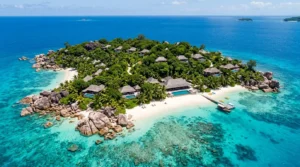
For first-time private island guests, the experience often defies expectations — not because it exceeds them, but because it is fundamentally different from anything a conventional resort can offer.
Total Environmental Immersion
On a private island, the natural environment is not a backdrop — it is the entire context of your stay. The sounds, the light, the rhythm of tides, the wildlife, the weather — all of it becomes immediate and present in a way that a large resort, with its constant human activity, inevitably muffles. Many guests describe the first full day on a private island as a kind of recalibration, as if the nervous system is slowly remembering a pace it had forgotten.
Personalized Service at a Different Level
Because private island resorts operate with very small guest counts, the staff-to-guest ratio is typically far higher than at a conventional luxury hotel. A dedicated butler, a private chef, and a team whose entire professional focus is your stay — rather than the needs of hundreds of other guests — creates a hospitality experience that feels fundamentally different. Meals happen when you want them. Activities are built around your interests. The day is yours to shape entirely.
Curated Activities That Fit the Environment
The best private island stays are not passive. Snorkeling with a resident marine biologist, guided night walks to observe nesting sea turtles, private dive excursions to rarely visited reefs, kayaking across glassy lagoons at dawn — these are the kinds of activities that private island environments make possible, and that larger resorts, with their programmed excursion menus, rarely replicate with the same intimacy.
This active, nature-connected dimension also ties the private island experience to the growing calmcation and digital detox movement — the desire for a stay that genuinely disconnects you from the noise of modern life in a setting that makes disconnection feel not like deprivation, but like relief.
How to Book a Private Island Stay Without Overpaying
The phrase “private island” still carries a price tag connotation that can feel intimidating, but there are practical strategies that make these experiences more accessible than most people assume.
Choose a Boutique Island Resort Over a Whole-Island Buyout
A full private island rental — where you book the entire island exclusively for your group — is indeed a premium product, typically starting in the tens of thousands of dollars per night. But a stay at a boutique private island resort, which operates like a small hotel on its own island, can be far more accessible. The island is still largely yours — because there are simply very few other guests — but the price reflects a per-villa rate rather than a whole-island hire fee. Many of the world’s finest private island resorts, including those in the Maldives and Seychelles, operate on this model.
Travel in the Shoulder Season
Private island resorts — like all premium island destinations — have significant seasonal pricing variation. Traveling in shoulder seasons (typically April to June and October to November in the Maldives; April to May and October in the Seychelles) can reduce rates by 20 to 40 percent compared to peak booking windows. Availability is also better, which matters for the most exclusive and sought-after properties.
Consider a Longer Stay
Private island properties almost universally reward longer stays with better per-night rates, upgraded inclusions, and a richer overall experience. A five or seven night stay typically qualifies for meaningful savings compared to booking two or three nights at peak rates — and the experience itself deepens significantly when you have enough time to fully settle into island pace.
This is where the private island stay intersects beautifully with the slow travel and micro-retirement philosophy — the idea that a smaller number of longer, deeper trips is more rewarding than a packed calendar of quick escapes.
Book Through a Specialist Advisor
Many of the world’s best private island resorts offer complimentary upgrade perks, resort credits, and added inclusions when bookings are made through specialist luxury travel advisors affiliated with programs like Virtuoso — a global network of luxury travel agencies whose members receive preferential rates and added value at partner properties worldwide. For a stay that may represent one of the most significant travel investments you make this year, the marginal cost of working with a specialist is almost always recovered through the inclusions they can unlock.
The Private Island Stay and Responsible Travel
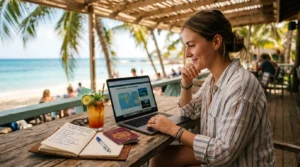
Any honest conversation about private island travel has to include sustainability. Islands are inherently fragile ecosystems — their coral reefs, freshwater systems, endemic wildlife, and local communities can all be affected by tourism, and the concentration of impact on a small land mass means that choices made by guests and operators matter more here than almost anywhere.
The encouraging reality is that many of the world’s best private island resorts are also among the most environmentally progressive properties in the hospitality industry. Small guest counts mean lower overall environmental footprints. Many properties generate their own solar power, manage their own water systems, run coral restoration programs, and employ significant numbers from the nearest island communities. Choosing a private island resort that takes this responsibility seriously is one of the most genuinely sustainable luxury travel choices available.
When evaluating a property, look for active conservation programs, local employment commitments, and clear sustainability reporting. The best operators are proud to share this information — and for travelers who want their most meaningful trips to also be their most responsible ones, a thoughtfully run private island stay can deliver on both counts simultaneously.
Is a Private Island Stay Right for You?
Not every traveler will fall in love with private island travel. If you are energized by the buzz of a lively resort pool, the variety of a large hotel’s restaurants, or the proximity to nightlife and shopping, a small private island may feel quiet in ways that do not suit your travel personality. And that is entirely valid.
But if what you are looking for in a trip is genuine restoration — unhurried mornings, natural beauty on an extraordinary scale, a sense of having truly left the world behind — then a private island stay in 2026 may be the most meaningful travel investment you can make. The world’s best private islands are not selling rooms. They are selling a relationship with a place. And in a year defined by the desire for travel that feels personal rather than performative, that is exactly the kind of experience most worth having.
Looking for more ways to elevate your island travel in 2026? Explore our guide to the best island honeymoon destinations and discover which islands are leading the way for digital nomads and slow living this year.